
Foundations That Don’t Fade
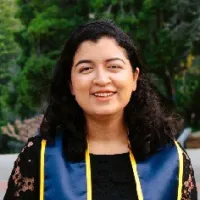
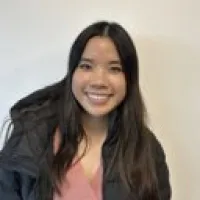
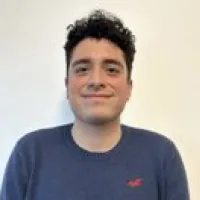
From Pre-Med to Med School – by Saffanat Sumra
I returned to the Patient Support Corps this past year as a medical student and was reminded that many of the formative lessons that I learned about healthcare in general were ones I learned before my dedicated medical education began — and they have persisted quietly as I continue to progress clinically and professionally through med school.
The Patient Support Corps is a service-learning internship program at UCSF which trains pre-health interns to serve patients as navigators or health coaches, while earning academic credit or a stipend.
Seven years ago, when I was accepted into the Patient Support Corps in my freshman year of undergraduate, being part of UCSF, an institution I had only heard of as a Berkeley undergrad at the time, felt unimaginable. I remember walking through Mulberry Union, getting lost on my way to the P7 floor, and eventually receiving my first UCSF ID — an affiliate badge. I remember thinking how it would feel to return to this place as a medical student — it felt like a dream. Returning now, I see those early beginnings unfolding again, and this time through others.
To understand what those early lessons look like now, this article seeks to make space for the voices of current undergraduates within the Patient Support Corps. What follows are reflections from two of the program’s current interns, Ricardo Bolanos Lopez and Victoria Le, whose words capture what it means to support patients at UCSF and to learn how to care with humility, consistency, and presence.
Bridging Patient Comprehension and Trust – by Ricardo Bolanos Lopez
My first encounter with the Patient Support Corps was an email from a scholarship and academic support program for low-income students called 10,000 Degrees. At the time, I was a first-year student at UC Berkeley worried about how to learn important skills that I could apply to my aspiring career of becoming a physician.
Through a partnership between the Patient Support Corps and 10,000 Degrees, they were searching for students like me, and applying was one of the best decisions I made for my career. In the span of a few months, I was picking up my UCSF affiliated badge from the Parnassus campus.
It felt unreal that now I was a part of an organization that I admired so much growing up. UCSF had always stood out to me as a place filled with brilliance, passion, and community, and now they were extending their hand to me through the Patient Support Corps.
I was assigned to the kidney transplant team. After various training sessions, I started working directly with the transplant patient population. My first patient in the program stands out to me as special. My first encounter with them was a telephone call to gather any questions they had before their transplant evaluation appointment.
I felt nervous and my voice stuttered a little since this was the first time I ever supported a patient in this way. Later that same week I attended the patient’s transplant evaluation appointment with Dr. Puneed Sood, a Nephrologist at UCSF working within transplant nephrology.
Working directly with the provider was a new and exciting way to gain insight into what a career in medicine looks like. I took a recording and generated a transcript so that if the patient wanted to review any important information later on, they had those resources readily available. Over the span of five months, the patient and I developed a supportive environment where they would contact my UCSF phone number with concerns and questions that came to mind.
The patient and I connected during three debrief calls undertaken by interns to check in on a patient’s progress with finding potential living donors. These calls were helpful for the patient in developing a plan to begin conversations to expand their options about living donation. The coaching encouraged this patient to consider approaching family members, friends, and community.
The slight pushes I gave the patient to make finding a living donor unique and catered to them even encouraged them to find friends who would be willing to be her support system in this process.
Regardless of my inexperience with medical terminology and the science of kidney disease, the patient trusted me to get their concerns addressed. When they had questions they weren’t sure how to get to their medical team, I sent them to the nurse.
This highlights the important intervention Patient Support Corps interns have in supporting patients’ comprehension by acting as a bridge between them and the medical team.
Our access to medical systems allows us to directly voice the needs of our patients to more specialized staff. The patient expressed their gratitude to me in our third debrief call. I was inspired by their initiative and hard work to find potential living donors. More stories like this need to be told.
I invited the patient to a Patient Support Corps event to talk about our work together in front of providers, surgeons, and community members. They told their side of the story with confidence and courage. It is rare that an intern gets to meet their patient in-person. I felt lucky to have supported this patient and connected them to a platform to share their story. Indeed, all patient stories matter.
Learning Patient Advocacy Through Empathy and Attentive Listening – by Victoria Le
As the daughter of Vietnamese refugee parents, I see firsthand the challenges my family faces when trying to navigate the complex healthcare system and the cultural stigmas surrounding illnesses and seeking care. With no one by their side to help them through appointments, I have seen my family members feel overwhelmed and lost in a system that does not support them when they need it most.
Working in the Patient Support Corps has been a transformative experience for me as an undergraduate, as I interact with diverse patient populations across California, many of whom face significant barriers (e.g., language, geography/distance, health literacy). Through this experience, I have learned invaluable lessons in patient advocacy, compassionate care, and cultural humility.
As I work alongside a team of healthcare professionals in the Multiple Myeloma department at UCSF, I gain firsthand insight into the collaborative, multidisciplinary approach required to deliver specialized patient care and the importance of bridging the gap between patients and healthcare accessibility. My role on this team is to serve as a health coach and scribe, synthesizing patient medical records into concise new patient summaries for physicians and recording patient appointments to ensure patients can revisit discussions.
I vividly remember one of my first interactions with a patient, where my job was to create a personalized question list to send to the physician, ensuring all of the patient’s concerns were communicated. During this call, the patient started feeling overwhelmed, crying because the conversation magnified the uncertainty of their diagnosis and potential treatment options.
I responded by maintaining a calm tone, allowing the patient to express their emotions while reassuring them that their feelings were valid. I also made sure to document the patient’s uncertainties in the question list that was shared with the physician. This experience put into perspective the emotional weight that patients carry and highlights the importance of empathy and attentive listening in patient care.
Additionally, when attending appointments, I record the sessions with patients’ consent to ensure that patients can review the conversation with the physician and capture important information that may have been overlooked or forgotten.
During and after these appointments, many patients have expressed gratitude for this recording, as they were initially concerned about having to remember everything discussed. This recording serves as a great resource for patients to revisit their conversation with the physician, and many have found reassurance from this.
Improving physician efficiency through new patient summaries and supporting patients through appointment recordings has been incredibly rewarding and a meaningful way to contribute to patient-centered care. This wonderful experience has connected me with a community of students, staff, and physicians who serve as life-long mentors and role models.
Care Isn’t Learned in the Clinic Alone — by Saffanat Sumra
Being in my clinical rotations, my days are now filled with many responsibilities I once only observed from the periphery. Yet, when I am with patients, I find myself returning to some of the instincts I developed years ago as a PSC intern. Volunteering again with PSC has made visible a continuity I hadn’t fully appreciated. While the scope of my responsibility has expanded, the foundations of how I learned to care have not changed.
The undergraduates in the PSC are learning what it means to sit with patients without answers, and without the pressure to perform. They are learning patient advocacy, compassionate care, and cultural humility. They are learning how to support patient comprehension and bridge gaps between patients and the medical team. And they are learning — again and again — that care is not always about doing more, but about being present and helping patients feel less alone as they navigate uncertainty.
Returning to the PSC has reminded me that those foundations don’t fade– they carry forward, quietly shaping how we show up for patients long after we receive a new badge.


