
What Enamel Remembers
From Britain’s NHS to emerging diagnostic technologies, how dentistry, early detection and health economics could shape the future of healthcare.
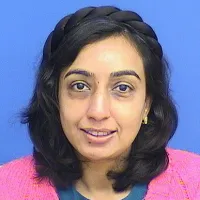
To most of us, a tooth is just a tooth. To Dr. Sabeen Bokhari, it can be a record of a life.
Enamel is the hardest tissue in the human body and forms in layers beginning before birth and continuing through childhood as different teeth develop and change throughout adulthood. Those layers can carry lifelong signs of illness, stress and time. While chronological age tells us how many years a person has lived, Bokhari is interested in a different question: Can teeth tell us how those years affected the body?
Bokhari trained as a dentist in Lahore, Pakistan, before working in clinical settings in Pakistan and the United Kingdom. But it was during her time with the NHS in the Scottish Highlands that she saw how much geography can shape health.
There were too few dentists serving communities spread across large distances. For patients, getting dental care could mean long journeys, long waits or putting off treatment until a small problem becomes serious.
Routine dental captures a range of conditions. Because early detection can affect treatment and outcomes, access to dental care can provide an important opportunity to identify suspicious changes and refer patients for further evaluation.
For Bokhari, this was a reminder that access to dental care is also access to healthcare. Delayed treatment can mean missed opportunities to manage disease or detect oral cancer early, when treatment is often more effective.
That experience stayed with her.
From treating teeth to studying them
Over time, Bokhari became increasingly interested in the science behind what she was seeing in patients.
During a master’s in regenerative dentistry at King’s College London, she worked with stem cells and explored whether damaged dental tissues could one day be regenerated rather than simply repaired.
Her questions eventually expanded from regeneration to aging.
In 2025, she presented Biting Down on Time: Dental Enamel as a Biomarker of Biological Age and Stress Exposure at Harvard Medical School’s Biomarkers of Aging conference. The idea behind the work is simple but intriguing: our teeth may preserve biological information that our birth dates cannot.
Opening doors for other dentists
As an examiner for the Royal College of Surgeons of England, Bokhari’s assesses overseas-trained dentists seeking to practice in the UK.
It is a role that connects back to what she witnessed in the Highlands. Health systems need high standards, but they also need enough qualified professionals to reach the communities that depend on them.
A new chapter in California
After moving to California, Bokhari began exploring another intersection: dentistry, longevity and artificial intelligence.
Her work has included a fellowship with the R42 Venture Capital Fund and Institute and involvement in the Bay Area’s longevity and AI research community. She is particularly interested in whether machine learning could help identify early signs of oral cancer from images or biological markers, potentially before a patient realizes something is wrong.
The health economics of detecting disease earlier
Bokhari’s experience also raises a question that extends beyond individual patients: where should a national health system invest its limited resources?
Governments and health systems devote substantial resources to dental care, yet access remains uneven. In Scotland, NHS spending on General Dental Services totaled £499.4 million in 2023-24. Could investing more effectively in access, prevention and earlier detection reduce some of the health and economic burden that occurs later? Screening and new diagnostic technologies carry costs of their own, and their value depends on whether they identify disease accurately enough and early enough to improve outcomes.
The places have shifted: Lahore, the Scottish Highlands, London and now California. But the question connecting Bokhari’s work has remained consistent:
How can we detect disease earlier and make good healthcare reach the people who need it?
Enamel remembers what the body has been through. Bokhari wants to learn how to read that record and use it to improve what happens next.


