
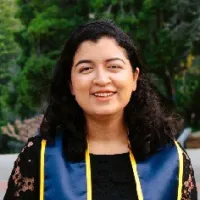
[Second place winner of the Synapse Storytelling Contest for non fiction.]
S: Subjective. “June” is a 79-year-old woman with a history of Type 2 Diabetes and Hypertension, admitted for right hip fracture following a fall in her studio. Now recovering post-surgery, she remains confined to bed, her movements slow and careful. As we speak, her hands move as if still gliding over piano keys, tracing silent melodies in the air. She was a pianist once, she tells me. Her eyes scan the room, pausing on the blank walls. “Everyone here has been wonderful,” she says, offering a small smile. “People keep coming in and going out. I’m sure everyone is busy.” There’s a quiet longing in her voice, a wish unspoken until she adds, almost hesitantly, that she would love to hear some music-- something to fill the silence with warmth and life.
O: Objective. June sits upright in bed, her posture gradually shifting from guarded to engaged as our conversation deepens. Initially, her gaze is distant and weary, but as she speaks of music, her eyes brighten, the weight of exhaustion momentarily lifting. Her fingers, which tremble at rest, become steady with purpose as she gestures through the air, and her voice gains strength with each recollection. Though the IV pole stands beside her bed and monitors beep in the background, they seem to fade as she speaks, her presence momentarily transported elsewhere-- perhaps to a sunlit studio with polished keys, sheet music spread across a stand, and echoes of long-practiced melodies filling the space. She is alert and oriented, maintaining steady eye contact, her engagement evident in the way she leans in slightly when describing her work.
A: Assessment. Type 2 Diabetes Mellitus, Hypertension, and recent right hip fracture. Additionally, signs of social isolation and potential emotional impact due to the transition in her life after the fall. June’s engagement noticeably improves when discussing her art. Her identity as a pianist presents a potential avenue for enhancing her overall hospital experience. Simple interventions-- such as playing music together-- may offer comfort.
P: Plan. Encourage continued engagement with creative expression by facilitating access to music, whether through the room’s TV or shared listening moments when possible.
Reflections from my practice SOAP note. It was one of my first student-lead, independent preceptorships. At first, I fumbled. The questions I had prepared to take June’s history blurred together as I struggled to remember my acronyms. But June didn’t seem to mind. She answered patiently, filling in the gaps.
Then, in the quiet spaces between my questions, June’s story began to unravel in a way I hadn’t expected. She wasn’t just listing symptoms-- she was expressing herself. “I play the piano,” she said as she continued to speak of pieces she used to play, and the way certain sounds transformed the ordinary into something extraordinary. I momentarily shifted away from my scripted questions as she mentioned a piece she used to love playing. I found a video of it online on my phone, and as the music began to play, her face lit up. Her fingers tapped gently on the blanket as if playing along. Between movements, her history unfolded further. She spoke of her first recital, of pieces she never quite mastered, and of heartbreaks and joys that found their way into her playing. Now and then, I tried to steer the conversation back to clinical questions. But mostly I listened, watching as she composed her story in words, her demeanor transforming with every note.
The sterile room softened. The silence between us was no longer something to fill-- it was part of the conversation. In those moments, she wasn’t just a patient with a hip fracture. She was a musician, a storyteller, revisiting a world she had once brought to life, chord by chord. And for the first time, I felt that I wasn’t just a medical student hoping to prove my utility. I was a witness, a participant, and an aspiring healer. At the start of my medical school training, I wondered what my involvement with my patients would be, especially since I couldn’t diagnose, prescribe medications or perform procedures just yet. I was a shadow, a passive observer. But June showed me otherwise. Our greatest value as medical students may not be in our ability to explain disease processes or interpret lab results, but rather in our capacity to listen and to acknowledge the quiet battles fought in hospital rooms. We are given a rare gift-- the gift of time. In the fast-moving world of medicine, we have the chance to pause, not just to take a patient’s history, but to build one together.
Follow-up Plan. Slow down and listen. Resist the urge to fill silences with scripted questions and instead allow space for stories to unfold. Remember that as a medical student, my most valuable contribution is often my time and attention. I may not always have the answers, but I can always offer presence. As I conclude this note, I acknowledge that the most important details of June’s story-- her resilience and her creativity -- may or may not be captured in any official medical record. But they are etched in my memory, a constant reminder of why I chose this path.
Signed: A humbled and inspired medical student, learning to listen with both ears and heart.


