
Lessons We Carry
During their first week of medical school, incoming UCSF medical students participate in Differences Matter Orientation (DMO), a two-day immersive experience centered on communication, connection, and building community across differences.
Through shared readings, small-group discussions, and conversations with patients, faculty, and fellow medical students, DMO invites students to consider how their own experiences and perspectives shape the ways they listen to, understand, and care for others.
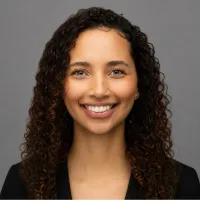
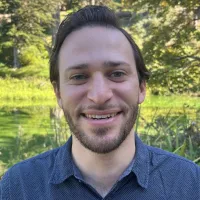
During the 2026 Differences Matter Orientation, fourth-year UCSF medical students Sydni Sheff and Daniel Zager were invited to speak to the incoming Class of 2030.
Nearing the end of their own time in medical school, they reflected on lessons from their experiences that they hoped might be meaningful to students just beginning theirs.
Sydni’s remarks reflected compassion and communication, and the responsibility of medical students to make patients feel heard, understood, and cared for. Daniel focused on compassion and community-building among the medical student class.
The following are the speeches we shared with the incoming class.
Sydni Sheff
Congratulations to the Class of 2030.
Wow, three years ago, I remember sitting in these exact seats as you all do today, nervous, excited, and quietly convinced I had barely squeaked by the admissions committee to make it here and that everyone else had medical school figured out. I hope you can all take this moment to take a deep breath and know that you have arrived and that you are meant to be here.
My name is Sydni Sheff. I’m a 4th-year medical student here at UCSF, and I’ll be applying into anesthesiology. It is truly a privilege to be here with you today
When I think about what medical school has taught me, I don't think first about medication dosages or differential diagnoses or how to write the perfect one-liner. I think about compassion and communication, the themes of this year's DMO, and those lessons didn't come from lectures. They came from moments that changed the way I see patients.
One encounter, in particular, has stayed with me ever since my third-year clerkships. I remember walking into a patient's room early in my internal medicine rotation, thinking about all the things medical students think about.
Oh gosh, what questions might I get pimped on when we leave? Am I participating enough? Or too much? Am I engaged, but not annoying? The balancing act that is the wards. Truthfully, I walked into that room thinking almost entirely about myself.
Somewhere along the way, my patient had become part of the background.
As our team began examining the patient, I was assigned the task of holding the phone interpreter, a skill you'll become very accustomed to during medical school. The attending and residents were talking shop, reviewing labs and imaging, and talking about the plan for the day, and frankly, the patient lay there looking lost… and scared.
As time passed, this patient, who spoke no English, tapped my hand, leaned toward the phone, and quietly said something. The interpreter paused and then translated:
"Is anyone listening to me?"
Then a moment later, he continued.
"Does anyone actually care what happens to me?"
I remember feeling a wave of shock. Then shame. Then sadness.
And I never forgot those questions.
I walked into the room that day thinking about myself, but when I walked out, I was thinking about my patient and the countless patients who lay in their hospital beds, confused and wondering if anyone was listening.
That encounter changed the way I thought about medicine. And the truth is, it resonated so deeply with me because it reminded me of something I had known long before I ever put on a white coat.
When I was seven years old, my mother suffered a stroke. Suddenly, doctor's appointments, physical therapy, and medications became part of everyday life.
What I remember most about that time is the healthcare professionals who made my mom and our family feel seen. Who explained. Who listened. Who treated her like a person worthy of knowing what was going on in her own body.
Years later, when my patient asked, "Is anyone listening to me?" I realized that question hit me so hard because my family, during our time of need, never had to wonder whether someone cared or was listening. Our care team showed us that the answer to those questions was yes. I realized in that moment that not every patient has the same experience my family did.
From that day on, I realized that every patient encounter contains two versions of medicine.
There is the medicine we are trained to see: the diagnosis, the labs, the imaging, the assessment and plan.
And then there is the medicine our patients experience: fear, uncertainty, loneliness, hopelessness.
And it is compassion and communication that allow us to bridge the gap between those two worlds in medicine.
The challenge is that medical school doesn't always reward those moments in obvious ways.
Medical school has a way of convincing you that your worth can be measured.
Exam scores. Honors. Publications. Evaluations.
And those things do matter, because our patients deserve excellent physicians. But excellence without compassion is incomplete.
So, starting today, I challenge you all to never underestimate the impact you can have as medical students.
Early in training, it's easy to believe that because you know the least, you contribute the least.
But one of the greatest lessons I learned is that your value isn't defined only by what you know. In fact, your value is greatly expanded by your willingness to learn, to listen, to notice, and to care.
One of the greatest gifts of being a medical student is that you still have something medicine is always running out of.
Time.
Time to sit down. Time to ask one more question. Time to hear the story that never made it into the chart. Time to notice when a patient seems scared, confused, or alone.
Many of the moments that shaped me did not happen because I had the right answer. They happened because I was there, every morning, every afternoon, listening, and a patient felt comfortable enough to tell me something they had not told anyone else.
Now, I was only able to be there, to listen, to stay the extra minute because so many people had first shown me how. I think of the professor who stayed forty-five minutes after class because I still didn't understand a concept, and the resident who pulled up a chair and patiently showed me how to pre-chart, my CMC coach who graciously has answered every single one of my late night stress emails, and my anatomy professor teaching us a ridiculous dance to remember the cranial nerves because she understood that sometimes the kindest thing you can do for a student is to make the hard thing a little bit joyful.
None of those moments appeared in any curriculum, yet they taught me that medicine is a profession you learn by being shown, generously, by people who didn't have to bother.
And every time I offered a patient my time, I was really just passing forward something that had first been given to me.
So here's what I hope you do. Go the extra mile. Stay in the room a little longer. Explain one more thing. Listen one minute more than you think you have time for. Help the classmate who's struggling. Be the person a scared patient chooses to ask, even when you don't yet have the answer, and always remember that kindness travels. Someone gave it to you, and here you are today at UCSF Medical School. Now it's your turn to pass it on.
And I want you to notice the people who teach you, the way I was taught, not just in lecture halls, but in workrooms and stairwells, and in the five extra minutes after everyone else has gone home. Let these people shape you. Then do the same for the student behind you.
Over the next four years, you will cross countless thresholds. You will learn a new language. You will develop skills you cannot yet imagine. You will become physicians.
But my hope is that among all the thresholds ahead of you, one stands out: the moment when, in addition to diagnosing heart failure or knowing the treatment for an upper GI bleed, you learn to recognize a patient who is scared. Lonely. Hopeless. And in need of some compassion and communication.
I hope that one day, when you're standing in a patient's room, overwhelmed by everything medicine is asking of you, you'll remember one question.
"Is anyone listening to me?"
Because every patient is asking that question in one way or another.
Sometimes with words. Sometimes with silence.
Starting today, it is your great privilege to make sure the answer to this question is always yes.
Thank you.
Daniel Zager, MS4
You never know who will come into your life and change it for good. I didn’t think twice when I made a new friend at Games in the Park before my first year. I showed up 45 minutes late because I still had so much to unpack at home — I had driven across the country 3 days earlier.
Here is a picture of me and my mom when we stopped in the Tetons for a day on our road trip and here’s a picture of my mattress on the floor, which was my bed for the first 2 weeks of school.
I was not thinking much about making new friends at Games in the Park, but I showed up because I felt like why not. Walking to lunch afterward, this new friend and I bonded over some gossip from my hometown. I thought we’d never really cross paths again, so I way overshared.
I took 5 gap years before med school, had a job and everything, had lived in 4 cities, so I thought I was done making new friends. I thought, I’m here strictly to get a medical education. But, the next day, on the first day of orientation, my new friend and I ran into each other in the front circle, as each of our moms had driven us to school that day, like we’re in kindergarten. Whoa. This friend might actually be around to stay.
We didn’t have any overlap in our small groups, anatomy slots, or CMC days. We didn’t share any common specialties that interested us. We just kinda had good vibes, and during a time that our heads were spinning with the pace of change, we bonded through that.
Over time, our friendship has blossomed as we introduced each other’s families and partners, went on rec pass trips together, celebrated momentous occasions and even grieved deaths together.
You never know who will be your lifeline during the most challenging periods until you get there. Surprising to me, the friends that I made in medical school are among the closest I’ve ever had.
But this took time. This took time! Despite making a friend on the first day, for those first 6-8 months, I was lonely the majority of the time. During first year, when people asked me if med school was hard, I always said the social transition was so much harder than the academic one.
Many of my identities — Puerto Rican, Jewish, queer, non-traditional student, Philadelphian — are not super well-represented in the class or the city. I spent lots of evenings alone, lots of anxious thoughts… like, is this classmate just being polite with me? Or is this a true burgeoning friendship? There’s only one way to find out, and that is to try!
It’s a weird feeling, to be surrounded by people constantly and also feel lonely. Some of the people are now my best friends in the world, while others I’ve barely seen in the past year. All of them are people who I’d consider part of my community. And I didn’t know how strong this community was until I gave them a chance to be strong for me. I’ll come back to this collage later.
During my most difficult moments, it was my med school classmates who were there for me. They were the only ones who understood the specific difficulties I was experiencing at that specific period. Whether it’s by being present during my difficult personal times, sharing resources, or giving me the lowdown on a rotation I was nervous about, my classmates have been my backbone, my cheerleaders, and my greatest resource.
Even after you go on rotations and see people less, you’d be surprised at how classmates will unexpectedly pop in and out of your life, brightening each other’s days and granting an opportunity for unspoken understanding: I know what you’re going through.
Classmates got me through the difficulties of medical school by giving so many moments of joy. We got some big moments: dressing in drag and performing in front of 200 screaming fans in Cole Hall. We also had the small moments: a 10-minute conversation on the shuttle or a knowing glance on rounds. You get to that point with your classmates by leading with an open mind.
How might you lead with an open mind and forge strong connections with classmates? I’ve kind of learned, my framework is, it’s two things: the invite and the attitude. The invite and the attitude.
The invite is external; a lot of the social things at UCSF have to be self-organized: so, the invite can look like a classwide post in the slack saying come to this beach bonfire, a study session, a night out, a museum exhibit, or a slack channel dedicated to random things, like pictures of your weeknight cooking. The invite is external.
Now, the attitude — this is the important one, I think — is internal: you gotta look inside, ask yourself, how can I be curious about the person in front of me? How can I reciprocate someone’s bid for connection? How can I be welcoming to this person who is just trying to figure things out like the rest of us? That’s the attitude.
Med school is already hard enough — the stresses, the pressures, the extracurriculars. Why make it more difficult by closing yourself off from your classmates? Or judging them?
Keep that open mind even after you found your closest friends or especially if you haven’t found your people. And give yourself time. These early days — pre-clinical years — feel like a social experiment. Friendships are made, unmade, and remade in a span of weeks. It can feel like musical chairs, that everybody is finding a friend group and cliques are already forming within the first few weeks.
I myself fell into this pattern — I wanted so badly to rush intimacy with new friends, find my group, and close off. It’s a natural tendency. But I encourage you: resist the urge to close off.
The opportunity for community can arise at any time, across all 4 years. Keep that open mind, because you don’t know when the next meaningful interaction, even brief, will arise. And you don’t know which of these interactions may lead to making your next best friend. You won’t be close friends with everybody, but you can foster friendliness with everyone.
So be the person who says yes when people reach out. Be the person who scours funcheap.com and invites others. Be the person who posts their cooked pasta in the slack. Be the person who is empathetic to your classmates, since we’re all doing this for the first time.
And there are many spaces at UCSF that facilitate this: the Culturally Affirming Mentoring (CAM) group, which Denise leads, as well as so many amazing affinity groups, more to which I can even give a shoutout but I’ll name PrideMed, LMSA, and the Jewish community as ones that really made me feel at home.
These spaces allow the support and pressure release valve necessary to get through these years. Look around, make eye contact with someone — these people will be your co-captains on this journey 4 years into the future and beyond. Medical training is way too long to just set your sights on the final destination. You gotta enjoy the moment too.
Keep saying yes. Open your heart. Community is not something already present for you to join — it is something you build, one interaction at a time.
Thank you very much!


