
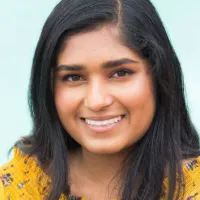
[First place winner of the Synapse Storytelling Contest Non Fiction category.]
When I was sixteen, I was diagnosed with polycystic ovary syndrome. My physician explained that I might have difficulty getting pregnant one day. There was a brief conversation about birth control. Then I went home.
At that age, I was far more worried about passing my driver’s test than whether I might struggle to conceive someday.
Like many teenagers, I filed the diagnosis away for a future version of myself. PCOS was, as far as I understood, a reproductive problem. Something about periods. Fertility. Ovaries.
Years later, I would discover that my body had been telling a much bigger story. I thought I was simply looking back on my own diagnosis. Instead, I found myself looking back on the history of a disease that medicine itself was still trying to understand.
In 1935, American gynecologists Irving Stein and Michael Leventhal described enlarged ovaries in women with irregular menstruation and infertility. Medicine named what it could see.
Polycystic. Except the “cysts” were never really cysts.
Ovary. Even though the condition reaches far beyond the ovaries.
Syndrome. A word that acknowledged complexity without quite explaining it.
It was not a careless name; it reflected the best science available at the time. Eighty-one years later, it was the name my physician gave to me. When I was diagnosed in 2016, I wasn’t just inheriting a condition. I was inheriting nearly a century of medical assumptions about it.
I wasn’t writing history. I was living inside it.
By the time I got to college, the story no longer fit. I trained with a collegiate sports team, exercising most days of the week. While my friends joked about the freshman fifteen, my body did something else. Despite practices, workouts, and careful eating, I gained weight rapidly. Lab work eventually labeled me prediabetic. I learned a new phrase: “insulin resistance.”
Nothing about this felt like an ovarian disease.
By then, medicine had already begun asking the same questions I was. Over the next three decades, researchers steadily expanded the definition of PCOS. The syndrome was no longer defined solely by what appeared on an ultrasound. Insulin resistance emerged as a central feature. Researchers documented increased risks of diabetes, cardiovascular disease, fatty liver disease, depression, sleep apnea, and pregnancy complications. By 2023, blood tests could even replace ultrasound in some patients because the ovaries themselves were no longer considered the defining feature.
Medicine kept redrawing the map, but my body never moved. The diagnosis had evolved, but the vocabulary had not. As my understanding of PCOS expanded, so did my confusion about where I was supposed to find care.
My OB/GYN recommended that I see an endocrinologist. It seemed like the obvious next step. Hormones were involved, after all.
I quickly learned that many endocrinologists did not routinely manage PCOS. Reproductive endocrinologists largely focused on fertility. Adult endocrinologists focused on diabetes and thyroid disease. My condition touched every one of those disciplines, yet seemed to belong completely to none of them. I found myself wondering who was actually supposed to care for me.
I was fortunate in one respect. Before college, I had worked in a reproductive endocrinology research lab studying PCOS. I knew how to search PubMed. I knew how to read primary literature.
Even with those advantages, I often felt like I was piecing my own care together.
For the first time, I found myself bringing journal articles to appointments. It felt strange. Not because I thought I knew more than my physicians, but because we were all trying to understand a disease that medicine itself was still redefining.
I spent evenings reading journal articles and scrolling through Reddit. I found hundreds of women whose stories mirrored my own. The questions sounded familiar.
Doesn’t an endocrinologist treat PCOS?
Why does every new doctor want to repeat my workup?
Why does everyone seem to understand only one piece of this disease?
If I was struggling to find the right care, what about everyone without PubMed bookmarks?
Looking back, I don’t think I fell through the cracks because my physicians weren’t listening. I fell through the cracks because medicine had drawn them there. The disease had outgrown the boundaries of the specialties responsible for treating it.
In 2026, after decades of accumulating evidence, the name finally changed. Polycystic ovary syndrome became “polyendocrine metabolic ovarian syndrome”, or PMOS. When I first heard the new name, I wondered whether changing a few words could really matter. It turns out it can.
The remarkable part of the story is not simply that experts chose a different name. It is that they invited patients into the process. More than 14,000 patients and health professionals participated in the international consensus that ultimately produced PMOS.
The new name did not create a new disease. It acknowledged the one that had been there all along.
It’s easy to dismiss names as semantics. In medicine, they are maps. They shape what physicians are taught to notice. They influence which specialists claim ownership of a condition. They affect what research receives funding, what complications are screened for, and how patients understand their own bodies.
For years, I believed I had a reproductive disorder that might matter someday. In reality, I had been living with a chronic endocrine and metabolic condition all along.
As a medical student, I now understand something I couldn’t have appreciated at sixteen:
doctors inherit the language of medicine long before they have the power to change it. Most of the clinicians I met were practicing exactly as they had been taught. They weren’t overlooking my metabolic health because they didn’t care. They were caring for a disease whose name suggested the wrong organ.
Medicine is supposed to change. It evolves through revision, asking physicians to question old assumptions, replace imperfect models with better ones, and admit when yesterday’s explanations no longer fits today’s evidence. That willingness to acknowledge incompleteness is one of medicine’s greatest strengths.
The transition from PCOS to PMOS is not simply a new label. It is an acknowledgment that our understanding of the disease has finally caught up with the lives patients have been living all along.
It will not change my hormones. It will not erase the years I spent trying to understand why exercise wasn’t enough, or why finding the right physician felt so difficult. It will not eliminate my future risk of diabetes or cardiovascular disease.
But it may change what happens to the next sixteen-year-old who receives the same diagnosis.
Maybe her physician will talk not only about fertility, but also about insulin resistance and cardiovascular health. Maybe she will understand from the beginning that this condition extends far beyond her ovaries. Maybe she will spend less time wondering which specialist is responsible for her care.
I still have the same condition I had when I was sixteen. The hormones haven’t changed. My ovaries haven’t changed. My risk of diabetes hasn’t changed.
But the story medicine tells about my body finally has.


